Monday, October 28, 2013

Awesome Science, Awesome Earth

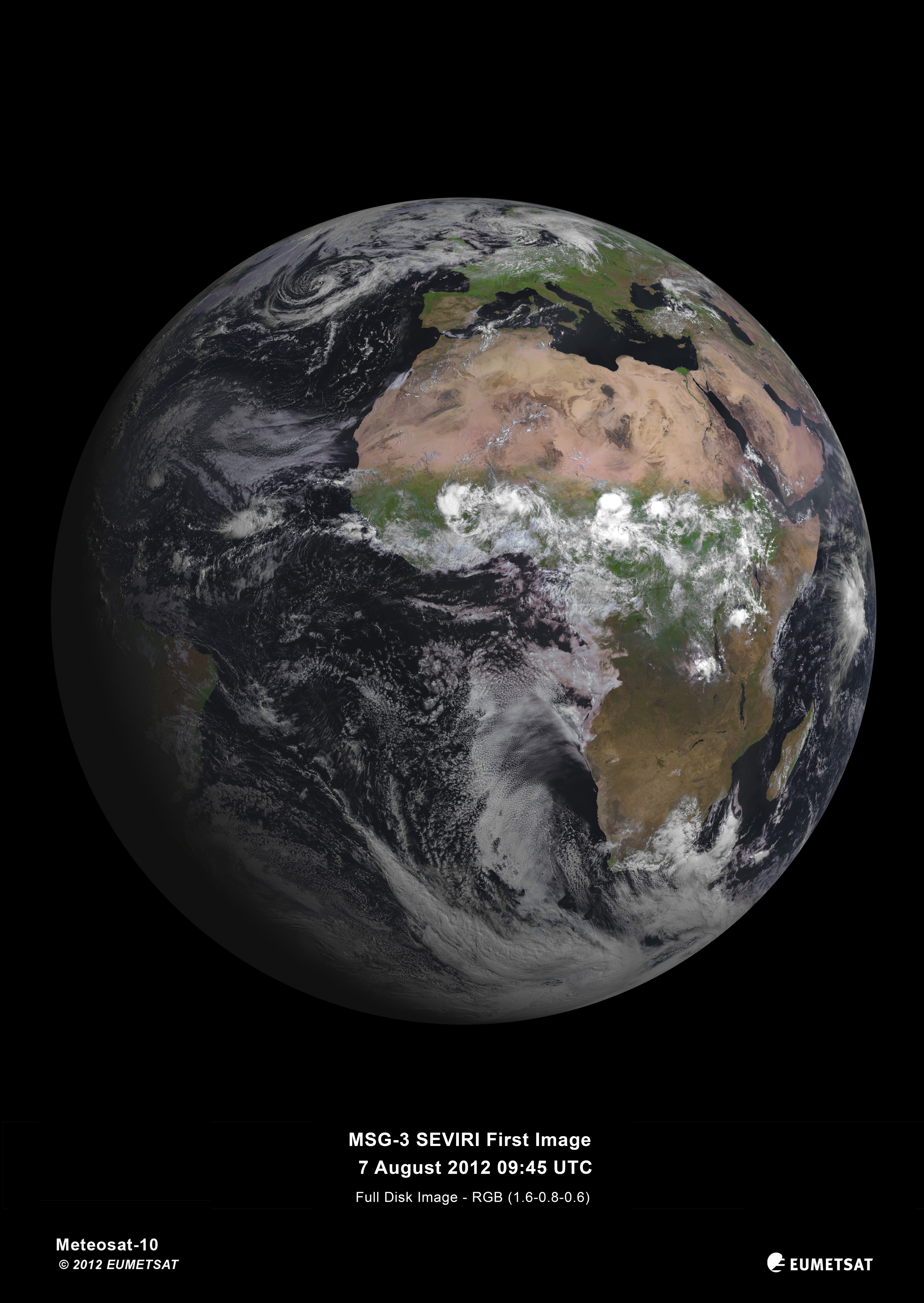
From the European Space Agency
The Story of Earth: the first 4.5 billion years, from stardust to living planet by Robert Hazen
New York, N.Y. : Penguin Books, 2013.
306 p. : ill. ; 21 cm. 

I love a good science book, and this one did not disappoint.  As Nancy Curtis of Library Journal writes, "Hazen has a gift for explaining science in lay terms."  He is able to convey a lot of rather intricate and tricky scientific knowledge and concepts about the formation of the earth and its features, but in ways that get the reader to visualize and contemplate the vast changes that our planet has undergone.  His book helps explain the way in which earth's familiar geology is intricately tied up with the existence of life - in other words, without life, the earth would be a very different place geologically. Specifically, Hazen posits that most of the minerals found on earth would not exist without the chemical changes in the land, oceans, and atmosphere that life sets in motion.

For me the most exciting part of reading The Story of Earth is how it provokes thinking and imagining the nearly incomprehensible stretches of time that make up both earth's history (that 4.5 billion years) and its future (about another 4 billion years).  I think I must be like most humans and feel that a lifetime of 75-100 years is a long time, or that ancient  history (human, that is!) 2,000-3,000 years in past is immense.  But the extent of deep time really is breathtaking - the thought that life was present by the 1 billionth year of earth's existence and yet carried on for another billion year before getting the knack of photosynthesis is really incredible. Of course it was the recognition of deep time that helped Darwin see the potential for truly radical changes of organisms - given only minute changes at any one time.

I will definitely be recommending this book for any students looking for a good science read.

Thursday, October 24, 2013

Appetizer With Chopsticks

Chopsticks by Jessica Anthony and Rodrigo Corral
New York : Razorbill, c2012.
1 v. (unpaged) : ill.(chiefly col.) ; 25 cm.

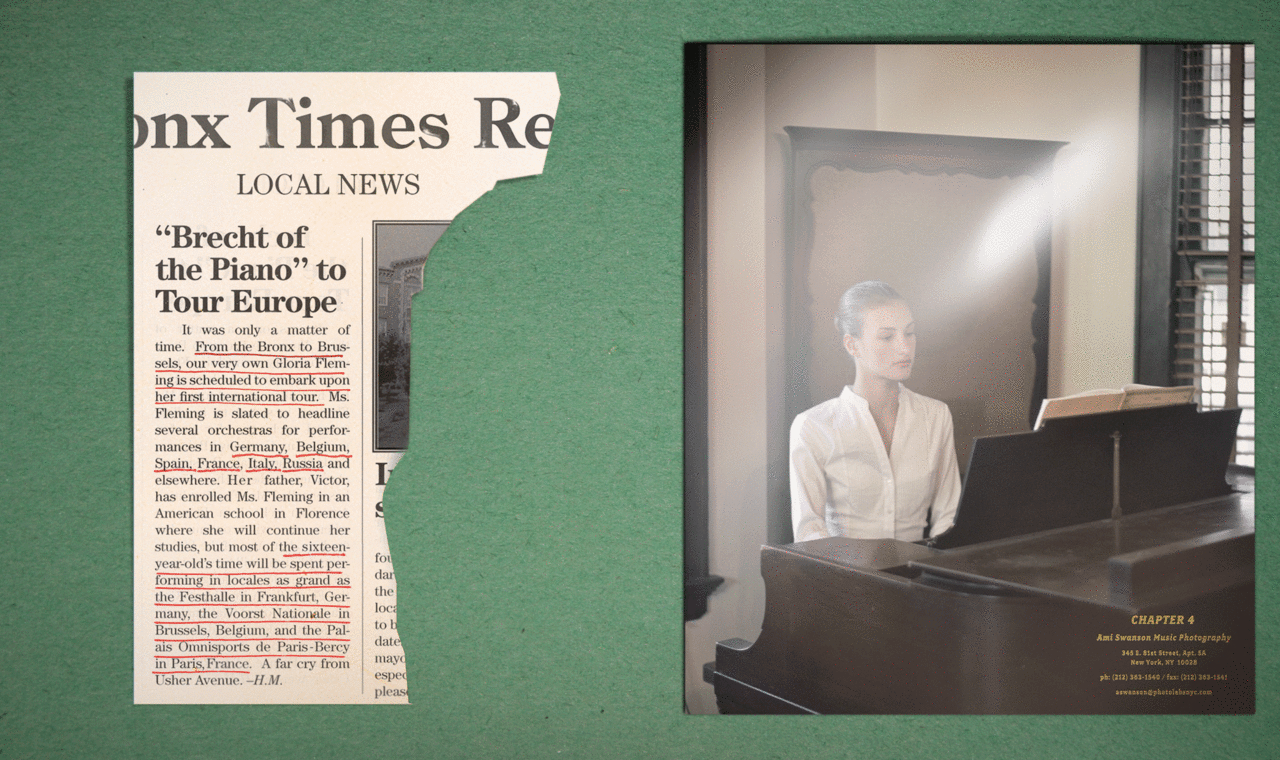
I really like a lot about this genre-blending novel.  It combines evocative photography/images/drawings, scrapbook-like formatting, links to YouTube videos, and IM shots to create a novel/pastiche of a teen piano prodigy's disappearance, mental troubles, family backstory, and passionate love affair with a mysterious and elusive teen from Argentina.  (The flavor of the book can be sampled at its Tumblr website.)  The story is told with sparse text and the "novel" can be read in about 30 min to 1 hour - and it is compelling.   So far so good! 

But for me the novel has significant shortcomings.  The idea of unreliable narrator is carried to the next level in this book by making the visual narrative itself (images of photos, plane tickets, menus, invitations) very unreliable.  After finishing the book and wondering about the ending, I found myself looking more closely at the visual text of the book.  Contradictions and incorrect documents and dates are taken to such a point as to render the very images potentially false.   At a point I came to be so aware of being manipulated by the authors that I couldn't really enjoy the narrative of the book.  Ultimately the book seemed more interested in its technique and appearance - and lacking in heart.

All this is in some ways all right with me.  This is a book that would be fun to have several readers read and then discuss (and argue about what they think happened - or didn't happen for that matter).  I also like that the book is easy to read and yet can really get readers to question what it means to trust the narrative of a book - fiction or non-fiction.

When I checked out reviews of the book, they seem to fall into two general camps: people love the book (see Kirkus and Reading Rants) or they like the book, but ultimately find it lacking (see Oops and Never Ending Bookshelf [note spoilers]).  I'd have to say I fall into the latter camp.  I find the novel to be more of a intriguing appetizer, but not a main course that satisfies.  Nevertheless, I'll be curious to see how students react to this book.


Friday, October 4, 2013

The Intoxicating Now

The Spectacular Now by Tim Tharp
New York : Knopf, c2008.
294 p. ; 22 cm.

This novel made its way to the movie screens late this summer - after receiving critical praise at Sundance 2013.  After seeing the positive reviews of the film, I wanted to read The Spectacular Now, and I'm glad I did.

Sutter Keely is the hero/antihero of this well written novel. He's a senior in high school who loves having fun, going to parties, having and not having girlfriends, telling good stories, drinking, and hearing himself talk.  In spite of his growing dependence on alcohol, and in spite of being a bit of a fast-talking, self-satisfied goof-off - Sutter has a lot of heart and really wants to do right by those he cares about.

The novel avoids easy plot events that seemed to be coming, and instead deals with the very real and often difficult emotional life of its characters - all while entertaining the reader with humor, sparkling dialogue, and an interesting plot.  The only really tricky thing about the book is its matter of fact acceptance of Sutter's alcoholism - but even there, the novel allows events and the reactions of others to get the reader really thinking about the complications of substance use.

Tharp has a wonderful ear for dialogue and makes a novel that young people can just enjoy for its humor and easy-to-relate-to situations, while really going deeper into the complicated process that a young person will face if they are trying to be authentic, decent, true to themselves, and caring toward those they love.  Definitely a novel worth reading.

Saturday, September 28, 2013

No Fault, All Star

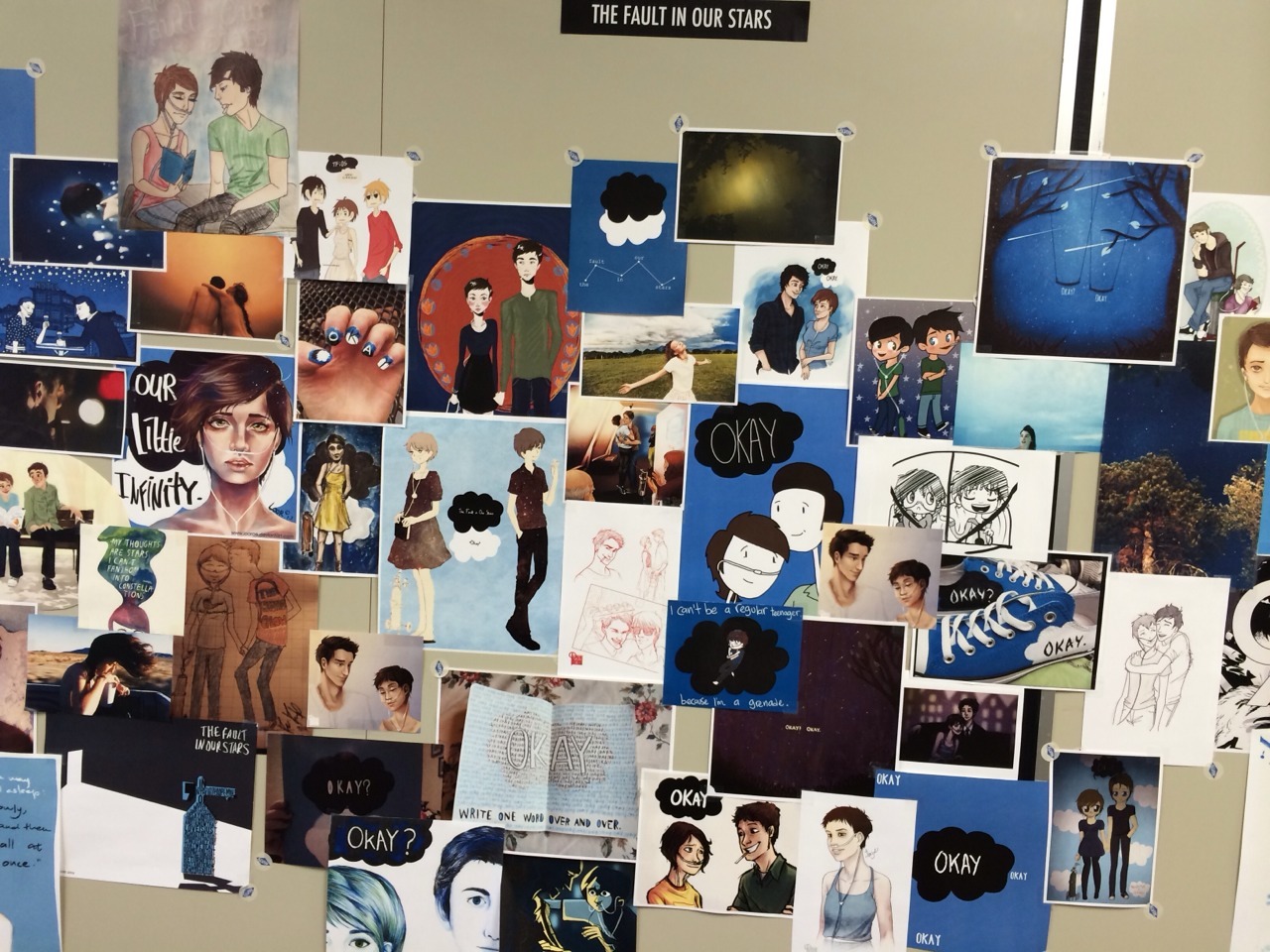
From John Green's Tumblr - he also is the co-creator of Vlogbrothers - wow!
The Fault in Our Stars by John Green
New York : Dutton Books, c2012.
1st ed.
318 p. ; 22 cm.

This is a very popular novel in our library - and this is a beautiful novel.  That is a wonderful thing to be able to write, and I'm really pleased to have recently had to buy a second copy of this novel (and will probably buy a few more when it comes out in paperback).

John Green has always been one of those solid author's in our collection with books like An Abundance of Katherines and Looking for Alaska, but with Fault in Our Stars - there has been a notable uptick in interest in Green.  In fact, I read the book after a couple of students said I had to read it.

It is really a testament to Green's skill as a writer that he takes on such a fraught topic as teens with cancer, and is able to create a deeply moving, tough, realistic, and existentially wonderful love story out of it. 

The story manages to deal with love, art, death, parenting, passion, fear and hope without feeling overwrought and forced. There are a few moments where the characters are just a little to facile with words and "profound," but those moments are few.  The plotting of the novel is also really nice.

Without giving away the plot, I will just say that by the end of the book, Green had me completely swept up in the emotional life of his characters...and it was hard to close the book when I was done.

One last note: the copy I read was loaned to me by a student.  I told her our copy was out and that the next one was on order, but that I wanted to read it soon.  She said, I'll loan you my copy.  Perks of being a librarian!

Monday, September 23, 2013

Gone But Not Forgotten

Map of Perdido Beach as posted on WikiFayz
Gone by Michael Grant
New York : HarperTeen, 2009, c2008.
1st pbk. ed.
558 p. : maps ; 21 cm.

This is the first book of the popular  Gone Series by Michael Grant.  It is a blend of science/paranormal fiction, action, horror, and thriller set in a small beachside California that is suddenly hit by a disaster of fantastic proportions: all persons 15 or older instantaneously disappear, the town is surrounded by a 20 mile radius bubble/force-field that is impenetrable, and - to make matters worse - many humans and animals are beginning to develop physics-defying powers and mutations.  Needless to say, it's a setting for the sorting out and conflict of the best and the worst human behaviors.

First, I should say that the book is VERY readable and entertaining, and moves along at a smart clip with lots of action, intrigue, surprises and hooks.  It is also skillfully written with many moments where the interactions of characters are subtly handled. On his website, Grant writes,
"When they're done with the first book, I want them to need that next book desperately. I want to surprise that reader and scare that reader and make that reader fall in love. In the end I want the reader to put down the book and think, 'Man, that was fun.'"
I think he has succeeded well.  Definitely fun, but for me I won't be hurrying to grab up the next installment - Hunger - in the series.  My main problem with Gone was that the necessity for the "willing suspension of disbelief" is stretched to the breaking point.  I was willing to accept the disappearance of all humans, 15 and up (pretty cool set-up), I was willing to accept the morphing preternatural powers of some of the characters and even the strange forcefield bubble that defines the FAYZ as this little landscape of horrors is called (could it be rationally related to the nuclear mishap referred to in the novel when a meteorite hit one of the reactors and fortunately buried its uranium deep underground?). But when the "Pack Leader" coyote started talking - and when he began communicating with some evil presence deep in the gold mine...well, you get the picture.

My second problem was with the ending.  It seemed rushed, chaotic, and not believable.  There is a scene where one of the "good guys" has a chance to easily kill one of the bad guys - who is truly a murderous psychopath - and just can't do it, alllowing the "bad guy" survives for another day (and another sequel). The ending seemed clearly dictated by the demands of allowing a sequel - and that really drives me nuts.

Complaints aside, I would happily recommend Gone for a student who is looking for a fun, somewhat scary, exciting read.  Especially a student who like long series - this one has five more installments: Hunger, Lies, Plague, Fear and Light - all of which our library owns.

Tuesday, September 17, 2013

Maybe a Masterpiece

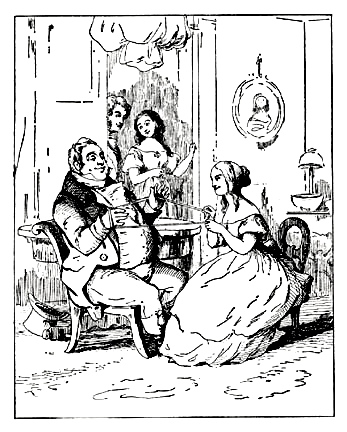
Image scanned by Gerald Ajam

Vanity Fair by William Makepeace Thackeray
London ; New York : Penguin Books, 2001.
xl, 866 p. : ill. ; 20 cm.

This should really go under my "summer break" reads, but I only finished it this weekend - so here it is as an fall semester post. As you can see from the page count (866!) it is a bit of a long book.  I had been wanting to read Vanity Fair for some time, and since summer is a good time to take on a thick book, Vanity Fair was on my list.

I found it fairly enjoyable and an interesting read.  It is hard not to be entertained by the pretenses, schemes, dishonesty and greed that infects the cast of characters from various classes of mid-19th century English society that are the subjects of Thackeray's novel.  He has a rather cynical and sarcastic tone throughout much of his work - in some ways closer to a satirist, than a straight novelist. 

The book wouldn't be the success it is without two characters in particular - the shrewd and scheming Rebecca Sharp - and the long-suffering lover, William Dobbin.  Rebecca, or Becky as she is more commonly called, has nasty character flaws - duplicity, appalling mothering, and scorn and ridicule for those she pretends to care about - but the reader can't help but appreciate her intelligence, cunning, and resourcefulness (and realize that she is no worse than the majority of characters that people Vanity Fair). 

Dobbin, as the introduction points out, is surely modeled after the author himself - who, like the character, endured unrequited love for years of his life, enamored of an already married woman.  Dobbin really is the only truly redeeming character in the book and serves as a foil to the many scoundrels populating the novel.

In the introduction to the book, John Carey argues that Vanity Fair is as great a masterpiece as Tolstoy's War and Peace.  I'm doubtful.  It's been more than ten years since I read War and Peace, but only two years since I read Anna Karenina, and I really don't think Thackeray's work is on par with Tolstoy.  I agree that it comes close at times, but Thackeray's general misanthropy and caustic view of humanity ends up depriving Vanity Fair of the pathos needed to overwhelm the reader, the way Tolstoy does.  Nevertheless, Vanity Fair is a remarkable work of fiction, and I would recommend it to any student asking for a recommendation from the classics of English fiction.

Friday, September 13, 2013

To Boneville - Finally!

Graphic is from Out of Boneville and comes from the Comic Book Legal Defense fund's article about a school library challenge being defeated.
Bone: out from Boneville by Jeff Smith
New York : Graphix, 2005.
1st Scholastic Ed.
138 p. : col. ill. ; 24 cm. 

I've been meaning to read Bone for a long time.  Too long!  When I first started in school librarianship over 10 years ago, and was looking for graphic novel recommendations, Jeff Smith's Bone consistently appeared in many graphic novel "Best" lists.  Bone has had great publishing and critical success.

I enjoyed Bone a lot, though I'm a little surprised (and pleased!) at how popular it is in the high school library.  I think I am surprised because it is so good-natured, likable, and lacking violence, sexual situations, and obscenities and even makes references to Moby Dick! It is a comic book series that continues to circulate frequently at my library.  Perhaps this is due to the fact that there is a lot of humor, likable characters, action, adventure and ambitious (dare one say epic?) plotting to the Bone tale.
I don't think I'll be reading all of the Bone books (we currently have numbers 1-8), but I can recommend the book and say that it does not disappoint. Fans of Bone might want to visit the author's lively web page.