Showing posts with label horror. Show all posts

Thursday, January 6, 2022

Bent Twisted Broken


Bent Heavens
by Daniel Kraus
New York : Square Fish, Henry Holt and Co., 2021.
1st Square Fish ed. 
291 p. ; 22 cm.      

Pretty much everything I wrote about Kraus' earlier novel, Scowler, applies to this novel. I wanted to like Bent Heavens, but I found it profoundly unsatisfying on several levels. I feel bad being so negative because Kraus explains (in an author's note at the end of the book) that he wrote this as a protest against the torture regime implemented under the Bush-Cheney administration.  It feels odd to dislike this book so much since it got starred reviews in Booklist and School Library Journal. 

The premise of the book is interesting. High schooler Liv's father (a high school English teacher) had a complete mental breakdown years previous when he insisted he was abducted by aliens. Then after being released he actually disappears and has been gone for two years. He left behind gruesome contraptions for trapping said aliens. Liv and her loner friend, Doug, check the traps weekly until one day, they catch an alien! 

Instead of turning the creature in to the authorities, Doug suggests torturing it as a way of both punishing it for what the aliens did to Liv's father and possibly getting it to reveal what happened (it can't speak but can squeal and whimper). There's a lot of gruesome beatings, cutting, and hurting that goes on in a torture shed on Liv's property - and I just NEVER believed Liv would go along with it.  I also think that Doug is that stereotype oddball loner type that supposedly is predisposed to sadism. By two thirds of the way through the book, I had guessed at the "wow" plot twist that ends the novel and so was neither surprised nor moved (unlike reviewers).

Well, obviously I did not like this novel. Instead of the heavy handed torture, a more subtle use of torture like that endorsed by Bush-Cheney would have been more pointed - e.g. forced nudity, sleep deprivation, sensory deprivation, water-boarding, etc.  Also having the alien able to communicate in some basic ways would have been more effective, too. Instead the plot zig zags into the nonsensical and absurd which left me wondering if I even read the same book as the people who starred this mess.

Thursday, September 17, 2020


Sawkill Girls
by Claire Legrand
New York, NY : Katherine Tegen Books, an imprint of HarperCollins Publishers, 2018.
1st ed.
447 p. ; 22 cm. 

A mother and her two teen daughters relocate to the wrong island to move past the grief of the father's recent death. It's the wrong island because it has a history of being a place where every ten years or so a girl goes missing - and one more has just disappeared before they arrive.  And the pace of these crimes is picking up fast.

This is not a novel about any ordinary human serial killer.  The villain is a supernatural monster whose feasting on its victims is pretty gruesome stuff!  I won't give a ton of spoilers, except to note that the newly arrived family is soon right at the center of the action,  along with two other teen females who live on the island.  Though most on the island have no clue about the monster, it does have allies and enemies among humans - both on the island and back on the mainland.  

A lot of the "fun" of this novel is learning bit by bit what's happening and who's involved - and with the way the plot picks up its pace so that by the end you are turning pages to see just what's going to happen.  Along the way there are deaths, betrayals, love, romance and danger (of course).

For me, I didn't care so much for the supernatural elements of the novel - the natural world is tied up in the paranormal events in which horses, moths, the sea and even the rocks all get involved.  But there is a strong gothic-horror atmospherism to this tale, along with interesting characters, and a strong underlying feminism that keeps it all moving. So if you are into thrilling horror with a strong infusion of action and paranormal energies and monsters then this novel will keep you satisfied right to its last page.      

Friday, October 19, 2018

Gruesome Transformations

Nightstruck by Jenna Black
New York : Tor Teen, a Tom Doherty associates book, 2016.
302 p. ; 22 cm.

This was an exciting, creative, and very readable paranormal, horror novel. The hero of this tale, Becket, unwittingly becomes the bridge to a portal to evil forces, allowing them to enter the regular world and wreak havoc in Philadelphia.  At sunset inanimate objects come to life inflicting injury and death on anyone caught outside. People are safe from these terrifying "constructs" as long as they are indoors, but some of the people caught outside become Nightstrucks - accomplices to the forces violence and mayhem taking over the city at night - and they can enter homes and do violence.

The novel builds in horror and suspense as it goes on, claiming surprising victims and pitting the hero of the novel against her best friend who has become one of the Nightstruck.  The hero also gets to find romance in this terrible time, so all is not bad...

However, the novel has a few problems, that remain unanswered.  The above mentioned best friend is unlikable before her transformation, and absolutely horrid afterward - and yet the hero of the novel just can't seem to fully reject her.  Also one has to wonder why the supernatural horror is limited to the boundaries of Philadelphia?

Problems aside, the novel is exciting and keeps one's attention.  Its ending is pretty surprising and clearly invites a sequel.  The reviews of the sequel are not very good, and I started it and had to agree that the first few pages were pretty bad.  Maybe the author should have let it end at one installment, but my guess is that she was under pressure to drag it out into at least a trilogy and maybe more, which is too bad.


Wednesday, March 29, 2017

Tortured to Life

The Madman's Daughter by Megan Shepard
New York, NY : Balzer + Bray, an imprint of HarperCollins Publishers, 2014.
420 p. ; 21 cm.

On a positive note, I'd say that The Madman's Daughter is creative and kind of fun to read.  It also made me want to read H. G. Well's The Island of Dr. Moreau.  But beyond that the novel didn't really didn't hit the target for me.

Shepard reimagines the story of Dr. Moreau from the vantage point of a character she creates, Juliet, the 16-year-old daughter whom Moreau abandoned to the harsh fate of being an orphan in Victorian England.  Juliet finds her way to the island in the South Pacific where her father is carrying out his hideous operations aimed at creating humans from animals.  But, as the positive Booklist review notes, "this is a romantic-triangle book first and foremost, as Juliet trembles, blushes, and heaves her bosom at both Moreau's hunky assistant and a dashing castaway." I didn't mind the romance but it just was overwrought for my tastes.  Combined, with the rather ludicrous animal-human metamorphoses that occur at the end of the novel, I at times just felt like the novel was silly, rather than thrilling.  For me that is too bad, because I think if it had been toned down a bit, it would have been both exciting, romantic, and thought-provoking.

However, I still would mention it to a student looking for some kind of romantic, thrilling adventure with a bit of the grotesque and science fiction thrown into the mix.

Tuesday, March 14, 2017

Yeah, I'm Scowling

Scowler by Daniel Kraus
New York : Ember, 2014.
289 p. ; 22 cm.     

I wish I could say I liked this book - I really do.  It's supposed to be a devilishly good Midwestern Gothic tale. It is an intense, twisted, psychological horror story of human depravity and domestic violence - which just didn't move or captivate me.

It's an odd tale of a 19 year old young man who at age ten survived his father's attempts to kill him after beating and torturing his wife.  Unfortunately for us and for the young man, his psyche is a twisted bin of delusions, violence, sexual frustration and anger - embodied in his three vividly imagined "living" playthings - a bear, a little Jesus, and a toothy, vile looking toy with very sharp edges - yep, Scowler.  All of this comes exploding to the fore when there  are the surreal impacts of several small meteorites in rural Iowa where this tale takes place.  This cosmic event breaks open the prison where his father is being held - setting him free to come after the family again, and plants a weirdly magnetic and never cooling meteorite on the farm where the family lives.

There were times as I read it that it just felt sordid and creepy.  I'm okay with dark and violence, but for me it has to have more than the goal of just entertainment or creating the "ick" factor (which this book definitely does).  However, I think I'm in the minority in my lack of enthusiasm for Scowler.  The book has received many rave reviews (check out the book's official page), and is popular with those wanting mature and gruesome horror tales.

It's not a book I'll be pushing, but if someone finds it and likes it, that's okay with me.

Tuesday, January 19, 2016

Slow Creep

Authority by Jeff Vandermeer
New York : Farrar, Straus and Giroux, 2014.
341 p. ; 19 cm.     

Last month I reviewed Annihilation, the first book in the Southern Reach trilogy, and now I'm posting a short review of book two - Authority.

I really enjoyed the first book in this series, but I found that book two - though good - was not quite as enjoyable to me. In this novel, the pace is much slower, as we follow an investigator sent in to head up and straighten up Southern Reach, the thirty-year old research/military/intelligence installation that borders Area X - the bizarre and threatening bio-zone that featured in book one.

In spite of not finding it as compelling as the first book, it is still good and has managed to do something that few other trilogies have managed to do for me - I'm really curious to read the third and final book in the series.  If it is a great conclusion, then book two's slower pace will be well worth it, and I will recommend the whole series to students.  If book three is a disappointment, then I'll still recommend book one, but let students decide whether plowing on through to the end was worth it.

Sunday, December 13, 2015

Cruel Justice

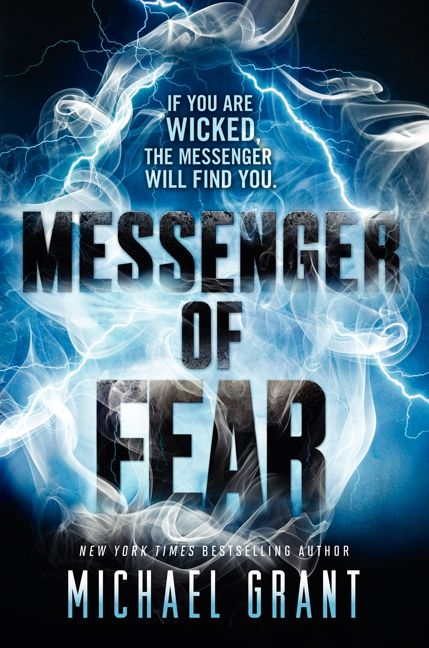
Messenger of Fear by Michael Grant
New York, NY : Katherine Tegen Books, an imprint of HarperCollins Publishers, 2015.
260, 12 p. ; 21 cm. 

Michael Grant is no stranger to writing bestsellers - his sprawling Gone series is popular, and I'm guessing this new series will do pretty well, too. 

The novel opens with a confused and disoriented main character seemingly lost in a surreal, magical and ominous reality of mists, muted colors and strange characters.  As the novel develops the reader learns that it is a supernatural world of spirits, demons, and demigods that lies behind everyday reality - and is the realm in which justice and injustice are exacted against rather puny and powerless humans who transgress against the moral order.

Grant is good at creating a frightening, magical and oppressive atmosphere and conveying the ways in which fear and imagination can be as terrifying as actual physical events. 

The writing is a little uneven.  I found that it got better as it went along.  The plotting is pretty good, though my guess is that readers will question question just how immoral some of the actions of characters are.  Is it really so terrible to kill off an animal that has been badly hurt in an accident - does it require the intervention of the cosmic forces of good and evil?

Problems aside, I think that readers wanting a creative horror novel will enjoy this read.  As School Library Journal put it in a review, the book will "delight those readers who enjoy a little gore and horror in their books."

Friday, December 11, 2015

Killer Biology Lessons

Annihilation by Jeff VanderMeer
New York : Farrar, Straus and Giroux, 2014.
195 p. ; 20 cm.

Annihilation is a different kind of science fiction, dystopian horror/thriller.  The telling of the story is low key, which makes the occasional violence and unnatural events that much more frightening and shocking.  Furthermore, a lot of the weirdness and creepiness of the novel is achieved with psychological and atmospheric touches instead of theatrical events and plot twists.  In this novel of a research expedition gone awry - people suddenly disappear, the fatal events of past expeditions are gradually revealed, and the biological weirdness of Area X is sometimes directly narrated (a strange plantlike growth that spells out an enigmatic message or a dolphin with eyes that look unsettlingly human).

A lot happens in this short and creepy little novel.  There is hypnosis, strange creatures, government lies, death, and deception.  It works as a stand alone and yet intrigues the reader to continue with the Southern Reach trilogy of which it is a part.  I'm glad to see that the book has received positive reviews and I would recommend it to readers looking for a fresh take on the horror genre.

Wednesday, May 27, 2015

Hallucinating Iowa & Genetically Modified Obessions

Grasshopper Jungle by Andrew Smith
New York, N.Y. : Dutton Books, 2014.
388 p. ; 22 cm.  

Grasshopper Jungle is a wild ride.  It has been critically acclaimed - from the New York Times to making the 2015 Printz honor list.  I found it a compelling read - exciting, clever, funny, sometimes gruesome, and sometimes brilliant.  However, I ultimately found myself disappointed with the near-manic, writerly wittiness of the main character combined with his obsessive fixation on his (and others' testicles).

Before going further, I should just recap that the novel centers around Austin, a young man in a dinky Iowa town who accidentally unleashes a genetically manipulated plague that turns people into grizzly bear-sized, unstoppable, deadly, exponentially-reproductive mantids.  Caught at the center of this apocalyptic nightmare are Austin, his beloved girl friend, Shann, and his best friend Robby - a smart and striking gay young man for whom Austin has more than just feelings of friendship.  Austin is in a constant state of being turned on and attracted to practically all females - and confused about his love and attraction to Robby.

There is a great deal of wit, humor, history, politics and pop culture to round out this novel.  But I couldn't help getting weary of Austin's fixation on his testicles and the testicles of practically every male that's mentioned in the novel.  The novel has a middle school fixation on things bodily and sexual and I found it tiresome.

I would have loved the novel more if the locker room humor had been cut by about half.  It still would be a funny, and bawdy story, but it just wouldn't seem like it was trying SO hard to be edgy.  I also just find humor about testicles to be kind of boring - something I have felt watching the Daily Show and The Colbert Report.  As I read it, I kept trying to imagine a woman writing anything remotely similar...maybe.

Would I recommend the book?  Yes, to a mature student looking for a rollicking send-up of the end-of-the-world genre.  It is a fun read.  Also the ending was really great...no compromise there and pleasantly surprising.


Thursday, September 4, 2014

Peculiar, Creepy, and Wildly Inventive

A found photo from Riggs' collection.
Miss Peregrine's Home for Peculiar Children by Ransom Riggs
Philadelphia : Quirk Books, 2013.
382 p. : ill. ; 21 cm.

I might have missed this book if not for a donation from our local Barnes & Noble store.  They gave our library several copies of various books from their "World Book Night"- including Miss Peregrine's Home for Peculiar Children.  I was intrigued by the cover...


...and thumbed through it to see that it was filled with enigmatic,evocative and unsettling photographs from times gone by.  I was definitely hooked.

The novel combines history (WWII and Holocaust survivors), time travel, monsters, the supernatural, danger, and romance - as Ransom Riggs weaves a great story sparked by his own hobby/obsession with old photographs.

I really enjoyed the wonderfully imaginative interweaving of photos and story.  As you read the novel, you will find the related photo reprinted within close proximity the page you're on. The photos are memorable and haunting in their own right, and add an element of "is this true" to what is otherwise a truly "out of this world" thriller.

I will definitely recommend this book to students looking for "something different," students who like fantasy/supernatural, and to any student who enjoys horror/monster/paranormal stories, too.


Monday, September 23, 2013

Gone But Not Forgotten

Map of Perdido Beach as posted on WikiFayz
Gone by Michael Grant
New York : HarperTeen, 2009, c2008.
1st pbk. ed.
558 p. : maps ; 21 cm.

This is the first book of the popular  Gone Series by Michael Grant.  It is a blend of science/paranormal fiction, action, horror, and thriller set in a small beachside California that is suddenly hit by a disaster of fantastic proportions: all persons 15 or older instantaneously disappear, the town is surrounded by a 20 mile radius bubble/force-field that is impenetrable, and - to make matters worse - many humans and animals are beginning to develop physics-defying powers and mutations.  Needless to say, it's a setting for the sorting out and conflict of the best and the worst human behaviors.

First, I should say that the book is VERY readable and entertaining, and moves along at a smart clip with lots of action, intrigue, surprises and hooks.  It is also skillfully written with many moments where the interactions of characters are subtly handled. On his website, Grant writes,
"When they're done with the first book, I want them to need that next book desperately. I want to surprise that reader and scare that reader and make that reader fall in love. In the end I want the reader to put down the book and think, 'Man, that was fun.'"
I think he has succeeded well.  Definitely fun, but for me I won't be hurrying to grab up the next installment - Hunger - in the series.  My main problem with Gone was that the necessity for the "willing suspension of disbelief" is stretched to the breaking point.  I was willing to accept the disappearance of all humans, 15 and up (pretty cool set-up), I was willing to accept the morphing preternatural powers of some of the characters and even the strange forcefield bubble that defines the FAYZ as this little landscape of horrors is called (could it be rationally related to the nuclear mishap referred to in the novel when a meteorite hit one of the reactors and fortunately buried its uranium deep underground?). But when the "Pack Leader" coyote started talking - and when he began communicating with some evil presence deep in the gold mine...well, you get the picture.

My second problem was with the ending.  It seemed rushed, chaotic, and not believable.  There is a scene where one of the "good guys" has a chance to easily kill one of the bad guys - who is truly a murderous psychopath - and just can't do it, alllowing the "bad guy" survives for another day (and another sequel). The ending seemed clearly dictated by the demands of allowing a sequel - and that really drives me nuts.

Complaints aside, I would happily recommend Gone for a student who is looking for a fun, somewhat scary, exciting read.  Especially a student who like long series - this one has five more installments: Hunger, Lies, Plague, Fear and Light - all of which our library owns.

Monday, April 9, 2012

All The World's a Maze

The Maze Runner by James Dashner
New York : Delacorte Press, c2009.
375 p. ; 22 cm.

This powerful and well-reviewed novel finds the main character - Thomas - entering a strange world as disoriented and confused as the reader.  The novel is set in a prison-like construct of the Glade where one teen boy is  delivered once a month by a one-way elevator.  The Glade is at the center of a massive maze, many square miles in expanse and populated by the half-animal/half-machine Grievers - large and agile slug-like creatures bristling with instruments of carnage and pain (saws, pincers, needles, etc).  The Grievers are especially active at night, when the massive walls of the Glade slide shut - and the massive walls of the maze rearrange themselves.

The novel revolves around Thomas and the other Gladers trying to find a solution to the maze, trying to figure out what malign agents have put them in the Glade, and trying to recover any memories of their lives before being delivered to the Glade.  Each boy has arrived in the Glade with his memory wiped, and able to sense and recover some memories from the past.  The action of the novel is raised to a pitch and pushed toward a dramatic climax by the delivery of a girl - a first, and the sudden end of the predicable patterns of the Glade - no more sunshine, no more deliveries of supplies, and no more closed walls at night when the Grievers are at their most predatory and active.

Several reviews I read felt that this was a great introductory novel to the sequels which will follow - see the series website here - but I found myself enjoying the novel as a metaphor for the human condition.  Like the boys and one girl in the glade, we find ourselves born into a world of malign forces over which we have almost no control, in which many of us have to struggle for survival in often tedious, meaningless ways, and where we are forever trying to figure out where we came from, where we are going and "what it all means."  This existential horror was what I really loved about this book.  The book leads to a half-resolution, setting itself up for a sequel - and this is probably what will draw many readers in as they look forward to learning about the world outside the maze, the purpose of the maze and the life and death adventures of the young men and young woman from the Glade.

This book might well appeal to fans of The Hunger Games and compares in an interesting way to The City of Ember.  I also thought of Ender's Game and Lord of the Flies as other books that could be compared to this  new dystopian novel.

Thursday, January 5, 2012

Wind, Mist, Shipwrecks and Shadows


The Prince of Mist by Carlos Ruiz Zafón
New York: Little, Brown, 2011, c2010.
232p. ; 21 cm.
[trans. from Spanish] 

Ruiz Zafón is the author of the bestselling novel, The Shadow of the Wind, which I read about 5 years ago on the recommendation of an exchange student from Argentina who was attending our high school.  He was very enthusiastic about Shadow of the Wind, telling me it was the best book he ever read and that it changed his life!  I read it and was an immediate fan.  So, when The Prince of Mist was recently published in the US, I bought it for our library right away.

The Prince of Mist is interesting in that it is Ruiz Zafón's first novel, and was written back in 1993.  It was published in Spain and was both written for and marketed to young adults - unlike Shadow of the Wind, which was written for adults.

I was not surprised to find out that The Prince of Mist was his first novel - the writing is just not as accomplished as his later novel.  That he wrote it for younger readers is also apparent in that the writing is far more conventional and cliched than his later work. I was wondering as I read it, if some of the weaker passages were the fault of the author or the translator - but since Lucia Graves is the translator of both, I'm guessing the shortcomings are of the author.

Shortcomings aside, The Prince of Mist is a great read.  It's an excellent example of an atmospheric novel - set in an indeterminate place along the coast during WWII, where clocks sometimes run backwards, statues move, and a cat has more personality than many people you may know.  It also has a lot of nice touches of creepy horror - demonic voices, a malign cat, an evil clown, a shipwreck where all but one passenger died, etc. The book is also well plotted, compelling the reader to want to find out what happens, and has romance, family relationships, romance and a climatic violent struggle.  The novel is also a good example of the archetype "fairy tale" between good and evil, promises made and broken, and the dangers of making deals with the "devil."


I was meaning to read it when I bought it - since I liked Shadow of the Wind so much - but I knew I had to read it when a student returned it recently and asked if we had the sequel to the book.  He definitely liked The Prince of Mist and was eager to read the next book by Ruiz Zafón,.

Sunday, July 3, 2011

Bad Scientist Equals Bad Monster

Frankenstein by Mary Shelley
New York: Signet Classic, c[2000]1963.
212 p. ; 21 cm.

So I finally got around to reading this classic of British literature and of the horror genre. I enjoyed reading it, but did find that a lot of the writing was quite overwrought - consider this little excerpt:
"My abhorrence of this fiend cannot be conceived. When I thought of him I gnashed my teeth, my eyes became inflamed, and revenge burst all bounds of moderation."
However, in spite of the dated feel of the tone, the plot is fun and compelling. There is also quite a bit to think on regarding the relation of humans to their exploitation of nature through science and the relation of the artist to what they create. Considering the monster, there is also much to think about regarding alienation, existential despair, and the cruelty of the human experience.

Finally, one has to respect the originality of the plot and its development in the hands of the Mary Shelly.

Monday, January 24, 2011

Classic Yuck!

The Curse of the Wendigo by Rick Yancey
New York : Simon & Schuster BFYR, c2010.
424 p. : ill. ; 23 cm.

Yancey's follow-up to The Monstrumologist is great; I think an even better book than the first. As in The Monstrumologist there is plenty of gruesome gore and supernatural violence - bodies turn up flayed, eviscerated, and missing eyes and faces. There are basements full of green sewage and dead bodies. What raises this book above all the ick is it's finely crafted plot and superbly drawn main characters - Dr. Warthrop the late 19th century monstrumologist and his orphaned assistant are fully developed and interesting characters.

The framing of this novel, like the first one, is a clever device attributing the story to the journals of a very old, deceased William Henry - giving the novel an air of authenticity. It also benefits from many references to people and events of the period, so that it reads a bit like historical fiction - but without the dullness that genre sometimes exhibits.

Our book group at the high school just finished Stephen King's Pet Sematary - and the contrast couldn't be greater. Where King's writing is sloppy and uneven, this book was tight and elegant. I'm definitely a fan.

Monday, April 19, 2010

Not For the Breakfast Table

The Monstrumologist by Rick Yance
New York : Simon & Schuster BFYR, c2009.
434 p. : ill. ; 23 cm.

This book is a Printz honor book - and it is a compelling read. This book would be a great step up for fans of the Cirque du Freak series. There is lot (and I mean lots) of gore and bloodshed. Because most of the violence is committed by monsters that are like humanoid great white sharks, it is more fantastical and less offensive than simple murder and mayhem stories.

The book is well-plotted and conceived, cleverly nested as a story from the late 1800s as conveyed in the journals of an old man who has passed away in a retirement home.

The novel has also features a likable orphan protagonist and uses many of the stock in trade tricks of Gothic horror - gloomy midnights in graveyards, basement labs, and underground lairs where the last monsters must be hunted. The novel has some creative touches in references to the civil war period and to the gruesome habits of parasites (an interesting comparison could be made to Peeps in this regard.)