Showing posts with label historical fiction. Show all posts

Friday, May 28, 2021

Long Book Sad War


For Whom the Bell Tolls
by Ernest Hemingway
New York : Scribner Paperback Fiction, 1995, c1940.
 471 p. ; 21 cm.     

I have to be honest, I didn't really plan to read this book, but after watching the PBS series on Hemingway, and then reading a book from our library about the Spanish Civil War, I was curious to read this novel of his. 

I found the PBS series problematic in many ways. It overly lionized Hemingway, and tended to minimize what an awful and incredibly sexist person he was.  But there was great footage and lots of other information worth taking in about this really important literary figure.  

I initially sat down to read just excerpts of the novel, but the writing is compelling and I ended up enjoying reading it, even when I felt like the movement of narrative was overly ponderous.  Like Mario Vargas Llosa in the documentary, I too felt that the love affair in the novel was overwrought, immature and something of a distraction.  However, the portrayal of characters in the guerrilla band that the main character works with and the ludicrous characters running the war for the Republic are really strong points of the novel.  Hemingway's ability to convey the moral degradations and salvations of people at war are also striking. And knowing as we do that the fascists triumph in Spain, it is sometimes exquisitely painful to read this novel that was written before the outcome was determined. 

I can't say I would recommend this book to a student, but occasionally students pick Hemingway for their senior literary research paper and I'm glad I'll have read this as a point of reference going forward.  


Tuesday, March 30, 2021

Roadtripping the Past and the Present


In the Footsteps of Crazy Horse
by Joseph Marshall III
New York : Amulet Books, [2015]
165 p. : ill., map ; 21 cm. 

This is a little gem of a book! I love a brief, emotional and enlightening book.  Marshall succinctly retells the story of Lakota Indian and warrior, Ta-sunko-witko - known more commonly as Crazy Horse.   

Marshall embeds the story of Crazy Horse within the story of Jimmy, a contemporary eleven-year-old Lakota boy growing up in South Dakota.  This boy has light hair and blue eyes and so is teased and bullied by a couple of classmates.  During the summer his beloved grandpa takes him on a road trip through South Dakota, Nebraska, Wyoming, and Montana - tracing places in the life of Crazy Horse which the grandpa fills in with storytelling.  As he teaches Jimmy about Crazy Horse's great character and courage,  he also notes that Crazy Horse also was known as "Light Hair" when he was young - something that connects him with Jimmy.

As they trace the places important in the life of Crazy Horse - Nebraska near Ash Hollow State Park, Forts Laramie and Reno in Wyoming, and battle sites like the Hundred in the Hands (Fetterman Fight) in Wyoming and the renowned Battle of the Little Bighorn (Battle of the Greasy Grass) in Montana. They even visit Fort Robinson in Nebraska where Crazy Horse surrendered and was murdered. 

Within all this history, is a lovely story of an elder passing on his knowledge to his grandson.  The grandfather, a Vietnam veteran, is clear-eyed about the cruel nature of war and battle, and also keenly aware that courage also means protecting the vulnerable and those you love.  By the end of the story, Jimmy is starting a new school year and - though fearful of the bullies - has a newfound strength in confronting them.

I definitely recommend this novel.


Friday, December 4, 2020

Monstrous Beauty


Mary
's Monster
 by Lita Judge
New York : Roaring Brook Press, 2018.
312 p. : ill. ; 24 cm.

I finally got around to reading Frankenstein back in 2011, and - after reading this fine book - I want to read it again! The reason is indicated in this book's full title Mary's Monster: Love, Madness, and How Mary Shelley created Frankenstein. 

Judge's book is an superb retelling of the courage, grit and brilliance of the young Mary Shelly with a focus on the years that lead to her creation of the classic novel, Frankenstein, published in 1818.  The author tells the well-researched story in easy free verse that moves the story along at a breathless clip.  We see Mary Shelly live the shock of her widowed father's remarriage to a very unlikable stepmother, her surprisingly lovely exile from family to an extended family in Scotland, and then her return and scandalous elopement with the already married Percy Bysshe Shelley - a passionate but troubled Romantic Poet.

It is during a Swiss exile with Percy and Byron that she begins writing her masterpiece. The success of this biography is that it is able to create a very clear narrative out of the tumultuous time that Mary Shelly wrote the novel. During the period covered she leaves home, returns, leaves, has two daughters who die and one son who survives, marries, is widowed, and sees her controversial novel become famous.

Additionally, the book is illustrated with evocative (haunting) illustrations of which the cover featured here is one.

I would definitely recommend this book to students.  It humanizes famous authors and makes their painful and passionate lives very real and very compelling.    

Friday, May 1, 2020

What Brown's Gonna Do With You


The Good Lord Bird
by James McBride
New York : Riverhead Books, 2014.
458 p. ; 21 cm.

When a book wins the National Book Award (2013), that definitely puts in on one's radar - and so I brought home The Good Lord Bird with me during the spring and summer pandemic lock-down.  

This novel is a rollicking, funny, provocative and hard to put down read.  It follows the adventures of Henry, an enslaved 12 year old freed in Kansas by the passionate and violent abolitionist, John Brown.  Mistaking Henry to be Henrietta, a girl, Brown "adopts" him into his band and nicknames her "Little Onion." The novel is told by Henry who - with his maturing over about three years, his change from enslaved to free, and his passing as a girl - allows McBride to explore many angles of John Brown's movement and eventual assault on Harper's Ferry.  McBride is able to present shifting and complex takes on fanaticism, recklessness, posturing, violence, racism, slavery, sexism, opportunism, danger, and sacrifice by giving his smart-alecky, wry and cynical main character center stage.

The cover of the book has a quote from the New York Times referencing Mark Twain, and I definitely felt the sensibilities of Twain's character Huck Finn in McBride's Henry.  

The novel is not without provocation.  Henry - suffering the harsh, spartan life of being with a paramilitary band on the frontier - at times wishes he were back being enslaved.  Fredrick Douglass comes in for some harsh treatment as a "diva" of the antislavery circuit and as an intemperate sexual harasser.  But all in all, the novel is a brilliant run through a historical episode in US history that still reverberates to this day.  I would definitely recommend it to a reader who wants a good literary read that will grab them and not let go.

Friday, April 3, 2020

Cruel School

Florida School for Boys (Dozier School)

The Nickel Boys
by Colson Whitehead
New York : Doubleday, [2019]  
213 p. ; 22 cm.
 
After reading Whitehead's The Underground Railroad, I knew I wanted to read his latest novel - The Nickel Boys.  Underground Railroad was brutal at times, but the fantastic nature of the novel helped me as a reader keep it's terror at bay - there is no such consolation in Nickel Boys, especially when you realize that the novel is firmly grounded in the real-life horrors that occurred in the Dozier School for Boys in the Florida panhandle. 

Whitehead's novel is set in the mid-60s and involves a stand-up African American high school student - Elwood- who is headed for college near Tallahassee.  But being a young black man in Jim Crow Florida lands Elwood in a reform school for boys that is run with sadistic cruelty, racism and corruption.  There, the idealistic Elwood faces the barbarism of the school and becomes friends with the more savvy Turner who is willing to help them both survive (boys in the school are sometimes killed by the staff both in real-life and in the novel). The novel is a taught and terrifying story of survival in the cruelest of environments. The reader never knows what will happen to the characters right up until the shocking ending. 

As I mentioned in my post about The Underground Railroad, Whitehead is a superb writer and - if you can endure the cruelty of the events - the novel is well worth reading.

Friday, March 20, 2020

An Unnerving Ride

The Underground Railroad by Colson Whitehead
New York : Anchor Books,  2018.
1st Anchor Bks. ed.
313 p. ; 21 cm.

This was supposed to be Spring Break week, and instead it has turned into the start of an extended period of school closings and home isolation for weeks (no one knows how many) as the Covid-19 pandemic picks up the pace of its global onslaught here in the US.

I am so glad that one of the novels I brought home with me for the break was Whitehead's The Underground Railroad.  The novel was published to huge acclaim - winning the Pulitzer Prize and National Book Award, and I heard it described as a fantastical tale of historical fiction where the figurative Underground Railroad is turned into an actual subterranean working railroad.  I was a bit skeptical - but - wow! - if you haven't read this novel, it is a must read.

Whitehead has also won one of those MacArthur "genius" grants and all I can say is "Yes!" and admire the foundation for recognizing him way back in 2002 when he had only written two novels. He writing is a thing of wonder.   He manages to do so many things right in such a complicated and yet accessible way.  He can create history that never was in order to make the history that was come alive in eerie and unsettling ways.  He made me mull over the (literally) tortured history of this country and the nature of human cruelty and courage in ways that go right to the heart.

Yes, Whitehead's Underground Railroad has real tunnels, tracks and locomotives - but you never for a moment doubt it.  And his narratives of enslaved life and the escape narrative will have your heart racing as you turn the pages rooting for the heroes of the novel.

It is such a thrill to read a writer's work when they are in their prime and to know that you are reading someone whose works will be read and admired long after you are gone. It is a thrill and an honor.

Can you tell I loved this novel?  Recommend it. Read it.  Sit with it and let it work its magic on you.  You won't be disappointed.


Friday, January 26, 2018

Insanely Plotted, but Complusively Readable

A Madness So Discreet by Mindy McGinnis
New York, NY : Katherine Tegen Books, an imprint of HarperCollins Publishers, 2016.
376 p. ; 22 cm.    

There is a lot to like about this revenge tale of murder and mystery set in the late 1800s.  The writing is smart, the characters are interesting and the novel has a dark edge that will appeal to readers who don't like their plots sweetened with syrupy romances and neat, happy endings.

The main character, Grace, is a striking figure - a young woman of a wealthy, influential family who is imprisoned in a Boston insane asylum because she has become pregnant.  The author has done a bit of research into the treatment of the "insane" and of women declared insane and developed a disturbing and satisfying novel out of the material.  If you want to see the benign asylum where Grace escaped to in Ohio, you can check out this page from Ohio University.

A lot of the plot springs out of the fact that Grace is an incest survivor who - having escaped Boston - wants to protect her younger sister from the perpetrator, and wants to exact revenge on him.  Did I also mention that she works undercover with a doctor in order to solve (by profiling) murders, particularly a murder involving a serial killer.  Her victimization, escape, hopes for revenge and protective zeal for her sister all come together in a dramatic conclusion that strains credibility, but is satisfying nonetheless.

Overall, I wasn't crazy about A Madness, but I will recommend it - with its historical background, strong female characters, and grim storyline it has a lot to offer a reader.


Tuesday, October 24, 2017

Tyranny and Butterflies

In the Time of the Butterflies by Julia Alvarez
Chapel Hill, N.C. : Algonquin Books of Chapel Hill, 1994.
325 p. ; 23 cm.

I'm not sure why I decided to read this book now, but I'm glad I did.  I think I was feeling a little unenthusiastic about the lightness of some of the YA fantasy books and wanted something with more substance.  I also had not read Alvarez yet and wanted to, so it seemed like a good a time as any. 

In the Time of Butterflies is the fictionalized account of four Dominican sisters - three of whom (along with their driver) were murdered by Trujillo, the horrid dictator of the Dominican Republic.  The novel is a beautiful retelling of the lives of the sisters and their families and how they became involved in revolutionary politics. For a novel that involves imprisonment, beatings, and political assassinations - it is really a tender and beautiful book. Alvarez seems determined to demythologize the heroics of the characters and instead show how human, humane and complicated it is for people to get involved in clandestine, violent political work.  Of course one can't read Alvarez' book and not think of a later novel set in the Trujillo dictatorship, Junot Diaz' 2007 masterpiece - The Brief Wondrous Life of Oscar Wao. Both are fantastic books, and offer unique angles on life under dictatorship ( and immigration in the case of Diaz).  I would recommend them both.

If read over a long period, the novel can get a little confusing (which sister is which and is married to who and what year is it?) but still manages to be engaging and moving.  I found reading the last chapter of the book to be a very emotional experience. Alvarez manages to not only tell the story of repression, revolution, and family, but she makes you, the reader, feel like it is your story, your family - and that the loss is your loss, too.

Friday, January 27, 2017

Fists and Crosses

Saints by Gene Luen Yang
New York : First Second, 2013.
170 p. : chiefly col. ill. ; 21 cm.  

After reading Boxers, I had to read this companion to it - which tells the same story, but from the point of view of a young Chinese, Christian convert who find herself on the opposite side of the violent Boxer Rebellion as the hero of Boxers.

All that I wrote in my review of Boxers below, applies to this book as well.  It's a great read and has the same captivating mix of history, supernatural, familial and social conflict, etc.

I'd definitely recommend reading Boxers first, it sets the stage well and makes it satisfying when the narrative exactly overlaps in several key scenes.

Wednesday, January 25, 2017

A Righteous and Harmonious Fist Bump

Boxers by Gene Luen Yang
New York : First Second, 2013.  
328 p. : chiefly col. ill. ; 21 cm.

Yang's American Born Chinese continues to circulate well with readers at our high school, and I hope that Boxers will do the same. With both fiction and graphic novels, the challenge of having historical events as the subject is finding the heart and power of that event and translating it to the genre being used.  I think it is a difficult challenge for any author, but especially for author's of young adult readers - where the desire to get lost in a book is a powerful appeal for readers already surrounded by informational text.  But it can be done, and I think Boxers proves it!

One never forgets that the power of Yang's book is the story and the characters involved in it. There is romance, danger, humor, wistfulness, longing, justice and magic propelling the story forward.  The comic artwork is clear, powerful, and interesting to look at.  Not convinced?  Take a look at some sample pages provide by Macmillian Publishers.

I was struck, after reading Boxers, at how cleverly the story made me want to know more about the actual history - and - at how pathetically little I know of Chinese history.  I had heard of the Boxer Rebellion, but knew little about it.  Furthermore, in reading some of the history that preceded it, I came across references to the Taiping Rebellion - a 14 year civil war that killed an estimate 20 million people!   And this is history that I knew nothing about.

So do I recommend this book? Absolutely.  It is a wonderful work of literary and visual art, and for teachers who might want to include it in a history class, there is even an extensive online teacher's guide to accompany the book.

Friday, September 30, 2016

Spirits Will Haunt You

The House of the Spirits by Isabel Allende
New York : Atria Paperback, 2015.
481 p. ; 21 cm.     

I'm not sure why it has taken me so long to read The House of the Spirits.  I've been aware of it for years and have seen Isabel Allende interviewed on TV, but it's just one of those books that it took me far too long to get around to, but I'm glad I finally read it.

It was odd to me that I found it took me a long time to lose myself in this book, but once I did it really was a rewarding experience.  In some ways for me the book really builds to a crescendo when the candidate becomes President of Chile.  The candidate is, of course, the fictional version of the real hero of Chile, Salvador Allende - who was brutally overthrown by the United States and Chilean military, ushering in a period of savage repression under the fascist dictatorship of General Pinochet.

But the novel is not so much about the coup, though that is the tragic climax of the novel.  Instead it is very much about the forces of love, greed, pride, ambition, politics, & art - all framed within a world of sensuous and magical forces.

Allende has a lot to say about the potential loveliness of the human spirit, but also its potential for smallness, sadness, and depravity.

When I finished the novel, I was surprised to see that it was first published back in 1982, just 9 years after the horrendous events of the coup of 1973 and while Chile was still in the grip of the dictatorship.  The novel holds up well and feels as timely as ever.

Tuesday, May 3, 2016

I Think I'll Skip the Movie

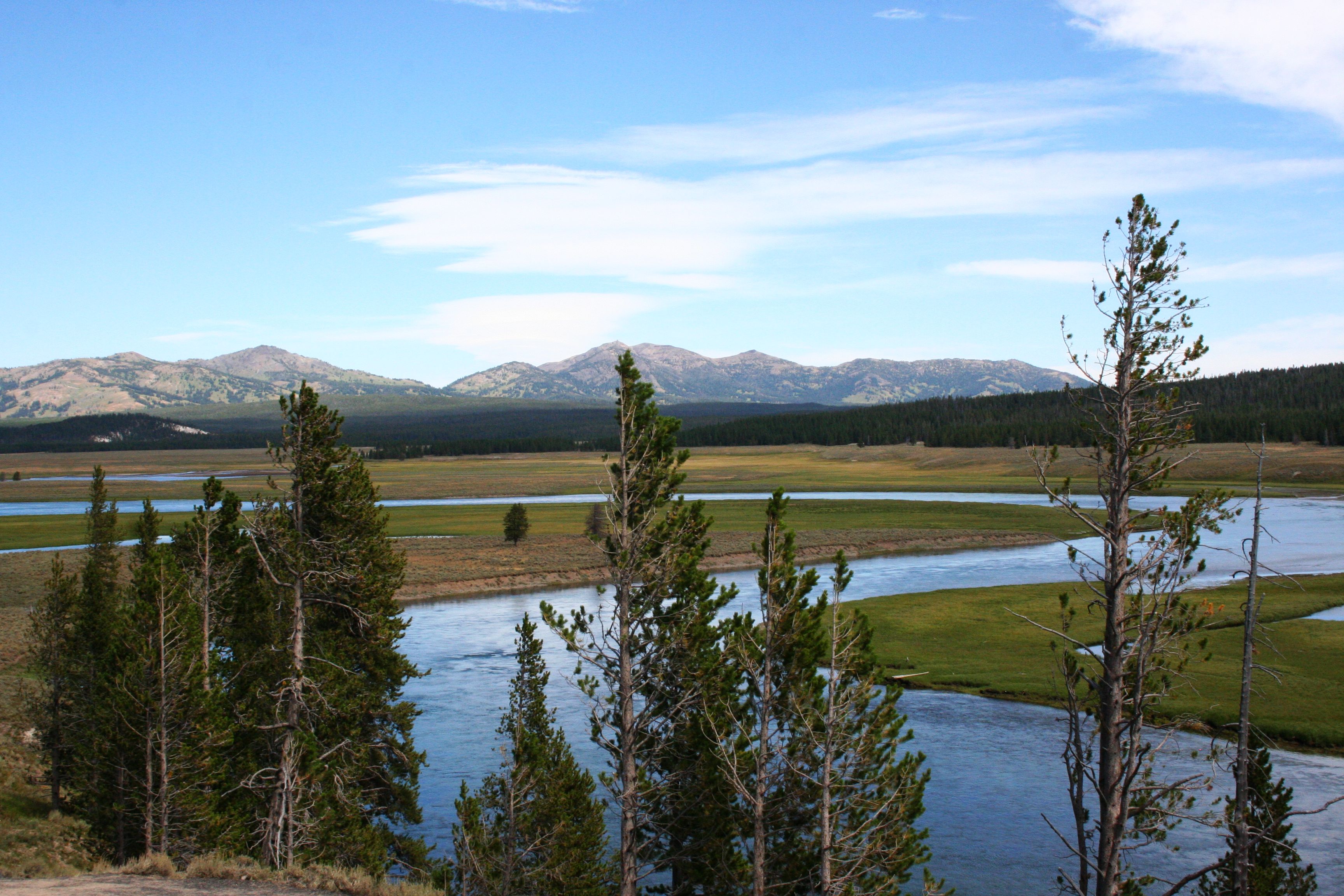
Yellowstone River
The Revenant by Michael Punke
New York : Picador, 2015.
262 p. : maps ; 21 cm.

Given that the movie version of this book was critically acclaimed, I decided to give it a read.  I'm glad I did.   It's not a great book, but it is a good one.  Punke has taken the mostly true story of Hugh Glass, an 1823 frontiersman, and fictionalized it into a solid revenge and survival tale.

I found The Revenant a compelling read, hard to put down, as Glass manages to survive harrowing experience after harrowing experience.  Beginning with his near fatal mauling by a grizzly to his almost being killed in an ambush toward the end of the novel, Glass is a fascinating figure - damned to experience shocking pains and injuries, and yet charmed in that he always walks away from them a survivor.  The revenge aspect was less interesting to me.  Part of what fuels Glass' survival is his determination to live and bring retribution to the men charged with watching over him, who instead robbed and abandoned him.  It's not a noble pursuit, but it feels realistic.

Along the way, there is some subtle and fascinating changes in Glass' attitudes about satisfying his desire for revenge.  But the power of the novel lies in Glass' remarkable skills, grit and ability to make quick and risky decisions that ultimately save his life.

The movie on the other hand, seems to have opted to bump the violence levels up several notches and to make revenge and gore the heart of the film - "pain porn" one reviewer calls it.  I think that's too bad, since in a more compassionate director's hands the film really could have wrestled with the troubled spirit of the frontiersmen and the ultimate emptiness of revenge attained.  That is at the heart of Punke's novel and is why I'll stick with the book and let others suffer through the film.    

Monday, April 6, 2015

Fine Read - Yes! Teen Read - Not So Sure

House of Purple Cedar by Tim Tingle
El Paso, Tex. : Cinco Puntos Press, 2014.
326 p. ; 24 cm. 

I truly enjoyed reading House of Purple Cedar.  Tingle's novel is filled with mystery, surrealism, danger, great characters and rarely told history.  But, I found myself wondering why it is being targeted toward young adults instead of an adult audience.  Publisher's Weekly noted that "much of the dialogue and exposition feels more appropriate for young adult literature" and I would take issue with that assessment.  I believe the book is a fine literary novel that adults would enjoy and appreciate.  

The story centers around events that happened in a young girl's life in the late 1890s in Choctaw territory in the state of Oklahoma.  The novel is an exploration of violence, accountability, redemption, community and family relations, racism, and spirituality. 

Along the way, there are murders, wildlife attacks, a panther that may or may not be a ghost, and humorous and touching romances.  The novel is written in a literary style that at times called to mind, Bless Me Ultima. I will definitely be recommending it to adults that I know and occasionally to the teen reader who wants something serious and challenging.


Monday, March 30, 2015

A Slave to Time Traveling

Kindred by Octavia Butler
Boston : Beacon Press, [2004], c1979.
287 p. ; 21 cm.

Kindred is a great novel.  I had to state that before saying anything else about Butler's novel, such as how it is  very creative science-fiction, well thought-out historical fiction, and an exciting read.  It really is a wonderful book.

The premise of the plot involves an African-American woman in the 1970s who is suddenly and involuntarily thrown back into the early 1800s where she has to navigate the incredibly dangerous world of antebellum slavery in Maryland.  She bounces back and forth several times, usually against her will, and the duration of time is very different in the past and present dimensions. I don't want to give away much more since many of the details of the time-travel are tightly woven into the plot of the novel.

It was serendipitous that I picked this book right after reading Twelve Years a Slave - they make perfect reading companions.  The book, though written in the 1970s, is very timely with it's deep exploration of US slavery - exploring its effects on society, family, the psyche, ethics, and relationships.

Butler's accomplishment is to create a thrilling, fascinating and deeply disturbing story that is hard to put down.  It's well-written, engaging, creative and...well, like I said, a great novel.