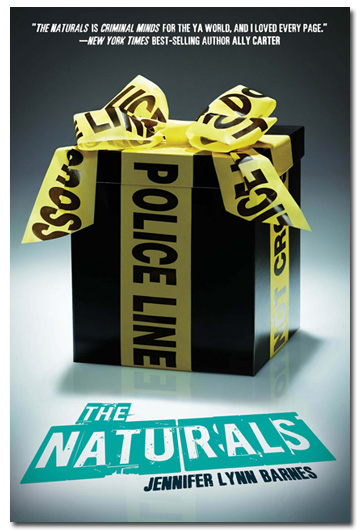
The Naturals by Jennifer Lynn Barnes
New York : Hyperion, [2013]
308 p. ; 22 cm.
It's probably no surprise that I didn't care for this novel. Most of what I wrote about Barry Lyga's I Hunt Killers applies here. I'm just not interested in being entertained by the lurid retelling of serial killer exploits, but this novel scored VOYA's perfect 10s, so I kind of felt like I had to give it a chance.
So how was it aside from the serial killer aspect? It was all right, but I just never could really believe that the characters were real people. The novel for me felt like watching a TV show (and it's interesting that many of its fans reference TV shows in their reviews).
I don't want to be too negative about the book, so I'll just defer to fans of serial killer and murder/thrillers. They love it! So if there's a student who is interested in this topic, I'll be sure to mention that this is a fun, thrilling and interesting read in that direction - with a plot that is sure to satisfy.
Friday, September 26, 2014
Thursday, September 4, 2014
Peculiar, Creepy, and Wildly Inventive
| A found photo from Riggs' collection. |
Philadelphia : Quirk Books, 2013.
382 p. : ill. ; 21 cm.
I might have missed this book if not for a donation from our local Barnes & Noble store. They gave our library several copies of various books from their "World Book Night"- including Miss Peregrine's Home for Peculiar Children. I was intrigued by the cover...
...and thumbed through it to see that it was filled with enigmatic,evocative and unsettling photographs from times gone by. I was definitely hooked.
The novel combines history (WWII and Holocaust survivors), time travel, monsters, the supernatural, danger, and romance - as Ransom Riggs weaves a great story sparked by his own hobby/obsession with old photographs.
I really enjoyed the wonderfully imaginative interweaving of photos and story. As you read the novel, you will find the related photo reprinted within close proximity the page you're on. The photos are memorable and haunting in their own right, and add an element of "is this true" to what is otherwise a truly "out of this world" thriller.
I will definitely recommend this book to students looking for "something different," students who like fantasy/supernatural, and to any student who enjoys horror/monster/paranormal stories, too.
Friday, August 15, 2014
Compass, Knife, Spyglass
| An Alethiometer |
The Golden Compass (bk. 1)
New York : Alfred A. Knopf, c1995.
399 p. ; 22 cm.
The Subtle Knife (bk. 2)
New York : Ballantine Books, 1998.
288 p. ; 18 cm.
The Amber Spyglass (bk. 3)
New York : Alfred A. Knopf, c2000.
518 p. ; 22 cm.
I read The Golden Compass about 12 years ago for a class in young adult literature. I thought it was pretty good at the time, but also remember having to rush through it so as to finish all the books on the class reading list. When my son - who is now several years out of high school - heard me say I was fishing around for some books to read during this summer, he said , "You really ought to read all the books in the The Golden Compass series," better known as His Dark Materials. I decided I would read them, and I have to say that I enjoyed them a lot.
The trilogy is a fantasy, science fiction tour de force. It manages to explore ideas of the multiverse, religion, theology, particle physics, war, loyalty, family, etc. within a wildly imaginative and every expanding story of adventure, danger, betrayal, loyalty and love. Religion and theology plays a central role in the books, and so it is no wonder that Pullman's series has faced many challenges and controversy (think Banned Books Week!)
For myself, I liked The Golden Compass best. I think it is the most spare and elegant - the next installments begin to layer on more and more elements of the supernatural - angels, god, the alternate worlds, etc. to the point where I found it a bit much. The Golden Compass is also the book that presents Pullman's great conceit - the daemon, an intelligent animal embodiment of the persons psyche/soul. It's really a marvelous concept and well developed throughout the trilogy. Though the first book was my favorite, I have no doubt that fantasy fans would love all three. There are great characters, exciting plot developments, and really wonderful expositions of the setting, etc.
Do you know a fantasy reader who has not read His Dark Materials? If so they won't be disappointed.
Friday, July 11, 2014
Sprawling History, Sprawling Novel
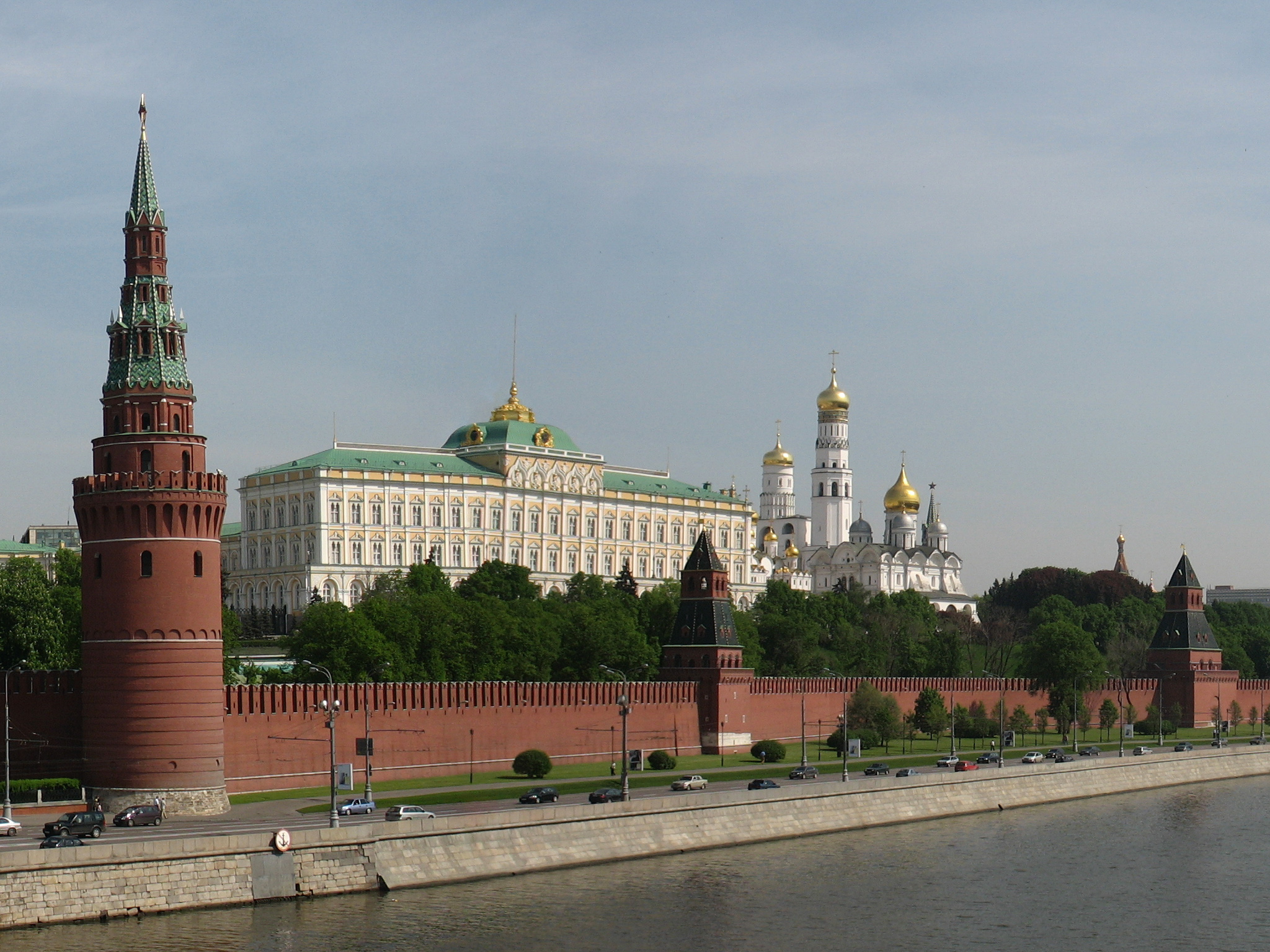
| The Kremlin, Moscow, Russia |
New York : Vintage Classics, 2011.
xxviii, 675 p. ; 21 cm.
I've been wanting to read Dr. Zhivago for some time, and given it's length (675 p.), it seemed like a good choice for a summer read.
I enjoyed a lot about this novel - it richly conveys the crazy reality that war and revolution can force on people, and the ways in which people try to find a meaningful life within that. It is also a great love story, of course, which is probably part of why the movie version in the 60s was so successful.
I liked the historical content and movement of a lot of the book, but I did find that the plot began to get a bit unwieldy and confusing as the novel went on, and felt rushed to me at the end. I also just found the increasing number of improbable coincidences became distracting as read the book.
This was a good book, but not a fantastic novel, in the way that Dostoevsky and Tolstoy have their truly magnificent articles. However, if a student is a fan of Russian/Soviet history and literature and is looking for a good read, Dr. Zhivago may be just what the doctor ordered!
Friday, June 27, 2014
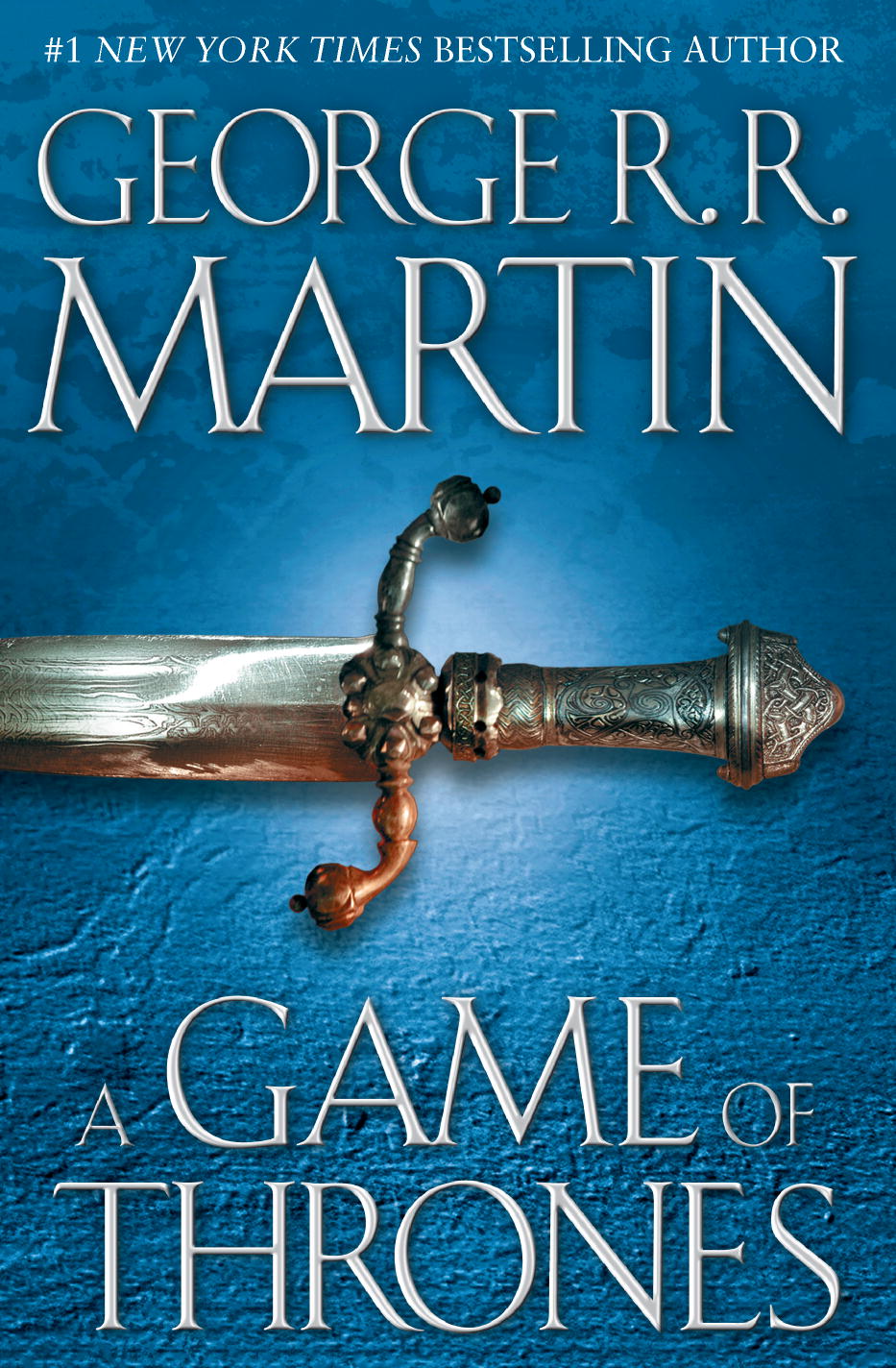
A Game of Thrones
by George R. R. Martin
New York : Bantam Books, 2011, c1996.
835 p. : maps ; 18 cm.
Writing about A Game of Thrones in the London Review of Books, John Lanchester comments that there are many avid readers who will read just about anything, but will absolutely not read fantasy and science fiction. That is almost an accurate description of me, except I will read a fantasy and sci fi that has become extremely popular, or is recommended to me by students. A Game of Thrones definitely fits that description, and I'm glad I read it.
A Game of Thrones represents complex, unpredictable storytelling at it's best. A character being a main character is no guarantee that he or she will still be alive at the end of the novel - and there is so much treachery, clandestine plotting, and violent conflict - that the plot itself presents surprise after surprise. Likewise the novel may be moving along in an extremely realistic fashion when suddenly a supernatural element appears so seamlessly that I it caused me to do a reader's double-take.
I think the thing that pleased me most about Martin's Game of Thrones was that it really is well written. I found myself at times quiet taken by the skill of descriptive setting, or the nuanced personality of a character. Though - like many fantasy worlds of fiction - it can get a bit complicated and the reader may find herself rechecking the maps at the front of the book and the appendices at the back - the book does not disappoint.
This is not a book that a librarian needs to recommend - though written in the 1990s, the book (and series) has become something of a publishing phenomena due to the wildly successful HBO series which it inspired. The book also has mature content, containing scenes of violence and sexuality.
by George R. R. Martin
New York : Bantam Books, 2011, c1996.
835 p. : maps ; 18 cm.
Writing about A Game of Thrones in the London Review of Books, John Lanchester comments that there are many avid readers who will read just about anything, but will absolutely not read fantasy and science fiction. That is almost an accurate description of me, except I will read a fantasy and sci fi that has become extremely popular, or is recommended to me by students. A Game of Thrones definitely fits that description, and I'm glad I read it.
A Game of Thrones represents complex, unpredictable storytelling at it's best. A character being a main character is no guarantee that he or she will still be alive at the end of the novel - and there is so much treachery, clandestine plotting, and violent conflict - that the plot itself presents surprise after surprise. Likewise the novel may be moving along in an extremely realistic fashion when suddenly a supernatural element appears so seamlessly that I it caused me to do a reader's double-take.
I think the thing that pleased me most about Martin's Game of Thrones was that it really is well written. I found myself at times quiet taken by the skill of descriptive setting, or the nuanced personality of a character. Though - like many fantasy worlds of fiction - it can get a bit complicated and the reader may find herself rechecking the maps at the front of the book and the appendices at the back - the book does not disappoint.
This is not a book that a librarian needs to recommend - though written in the 1990s, the book (and series) has become something of a publishing phenomena due to the wildly successful HBO series which it inspired. The book also has mature content, containing scenes of violence and sexuality.
Tuesday, May 27, 2014
Study War No More
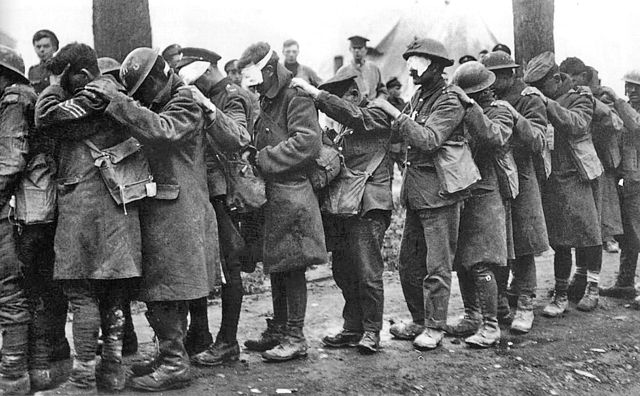
| British 55th (West Lancashire) Division troops blinded by tear gas during the Battle of Estaires, 10 April 1918 |
New York : Vintage Books, 2000.
xvi, 475 p. : ill., maps ; 21 cm.
I've been slogging through a lot of books of European history and especially WWI - The Proud Tower, The Sleepwalkers, and now Keegan's First World War, which I pointedly finished on Memorial Day.
World War One is truly emblematic of the sickening, meaningless, barbarous, and utterly worthless human phenomena of making war - particularly modern warfare. Especially painful is the fact that WWI essentially lay the groundwork for WWII. As Keegan states in the closing pages of his book, "The Second World War was the continuation of the First...."
When I finished this book, I was left numbed by the staggering numbers of young men killed in the WWI. This passage toward the end of Keegan's work gives a sense of the monstrous carnage that WWI unleashed.
"To the million dead of the British Empire and the 1,700,000 French dead, we must add 1,500,000 soldiers of the Hapsburg Empire who did not return, two million Germans, 460,000 Italians, 1,700,000 Russians, and many hundreds of thousands of Turks...."In what moral universe can a person truly reckon with or comprehend such massive slaughter? And then to realize that these numbers will be increased by a factor of six or seven (including many more civilians) in the horrors of WWII leaves me feeling despair.
I will say that Keegan has managed to pull together a readable and lucid account of WWI which is no small accomplishment. He also manages to tell the story with moral conviction, but a light ideological touch, so that the reader is allowed to form her own opinions about where the guilt and responsibility lies for the nightmare that WWI was. I would definitely recommend it to a student who is interested in a detailed but compact history of the "Great War."
Monday, May 5, 2014
a poet 'swonder full i fe!
E. E. Cummings: a poet's life by Catherine Reef
New York : Clarion Books, c2006.
149 p. : ill. ; 26 cm.
Finishing up April, National Poetry Month, with this biography of the famous US poet, e.e. cummings, seemed like a good idea. And it was! Reef has put together a wonderful and accessible biography of Cummings. I really appreciated that Reef manages to present a lot of information in a manageable number of pages - and yet really develops a fascinating portrait of Cummings as a truly unique artist and human being.
I was really struck by how original Cummings was. His poetry still has a freshness and vitality, but must have seemed stunningly unique when he published it. Reef also gives attention to Cummings serious work as a painter (as the self-portrait above reveals).
Reef also conveys what an original Cummings was in so many ways. Though from a very conventional family, he rebelled by moving to Greenwich Village, volunteering to be an ambulance driver in WWI, traveling widely abroad, championing avant-garde artists (e.g. the Armory Show artists).
Reef manages to convey the various milieus that defined Cummings' life - WWI, the 1920s, WWII, the New Deal, etc. She also brings Cummings to life as a man of great dedication, passion, talent, wit, playfulness and (yes) love - and all in the space of 149 pages enlivened with wonderful photographs and illustrations.
I would definitely recommend this book to any student curious about E. E. Cummings specifically or the life of an artist and writer generally.
Subscribe to:
Posts (Atom)